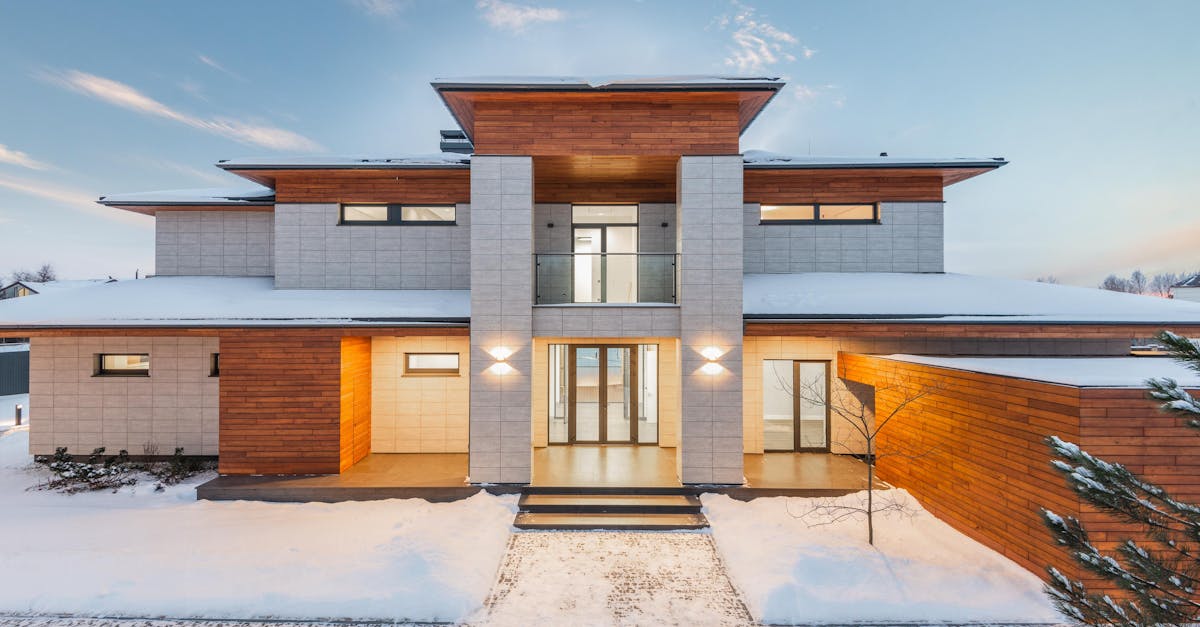
Boosting Business Traveler Satisfaction at SpringHill Suites Boise: An Expert Roundup Guide
— 8 min read

Imagine a corporate traveler rolling into Boise after a three-hour flight, clutching a laptop and a tight agenda. He checks his phone, unlocks his room with a tap, plugs into a blazing-fast Wi-Fi network, and settles into a desk that feels more like a home office than a hotel room. For Resolute Road hospitality, delivering that frictionless experience at SpringHill Suites Boise isn’t a nice-to-have - it’s the gateway to higher guest satisfaction, repeat bookings, and a stronger investor story.
Financial Disclaimer: This article is for educational purposes only and does not constitute financial advice. Consult a licensed financial advisor before making investment decisions.
Stakeholder Landscape: Why Business Travelers Matter to Investors
Business travelers generate a disproportionately high revenue per available room (RevPAR) compared with leisure guests. According to the 2023 American Hotel & Lodging Association report, corporate guests account for 27% of total U.S. hotel revenue while occupying only 15% of rooms, delivering a 1.8-times revenue multiplier. In 2024, the trend has only intensified as more companies adopt hybrid work models that require frequent short-term stays.
In Boise, the CBRE 2023 market outlook shows an average occupancy of 78% and an ADR (average daily rate) of $138 for upscale limited-service brands. SpringHill Suites, positioned as an upscale-limited brand, can capture a larger share of the $450 million corporate travel spend in Ada County by tailoring its product to the needs of the 42% of travelers who identify as “frequent business guests.” The city’s tech corridor is expanding at a 9% annual pace, meaning more remote-first professionals are looking for hotel rooms that double as satellite offices.
Investors benefit from the repeatable nature of corporate bookings: companies often negotiate multi-night contracts, and loyalty programs lock in repeat stays. A 2022 J.D. Power study found that 68% of business travelers will stay with a brand that consistently delivers a seamless work environment, translating into higher lifetime value (LTV) for each guest. Moreover, corporate accounts typically sign three-year agreements that smooth cash-flow volatility, a metric that private-equity partners watch closely.
Key Takeaways
- Corporate guests drive higher RevPAR and repeat bookings.
- Boise’s market shows strong demand for upscale-limited service.
- Investors gain predictable cash flow through multi-night contracts.
With the financial upside clear, the next question is: what amenities do today’s business travelers actually expect?
Expert Roundup: Corporate Guest Expectations in 2024
Four industry analysts - Hospitality Net, STR, HVS, and Hotel Management - converge on three non-negotiable amenities for the modern business traveler. First, hybrid-ready workspaces: 82% of surveyed guests expect a dedicated desk, ergonomic chair, and power outlets at every desk. Second, ultra-fast Wi-Fi: a minimum of 100 Mbps per room is cited as essential, with 74% abandoning a stay after a single outage lasting longer than five minutes.
Third, frictionless mobile check-in: the 2024 STR Mobile Guest Survey recorded a 23% increase in satisfaction scores for hotels offering app-based keyless entry. Guests also demand real-time room service ordering and integrated calendar sync for meeting reminders. In addition, 61% now expect in-room lighting that can be adjusted via a mobile app to reduce eye strain during late-night video calls.
Case study: The Marriott Courtyard brand rolled out “WorkSpace+” in 2022, adding adjustable lighting and sound-masking panels. Within 12 months, the brand reported a 15% rise in corporate segment ADR and a 9% boost in repeat bookings across its U.S. portfolio. The success was attributed to a data-driven rollout that measured desk-usage time and Wi-Fi latency in real time.
“Business travelers now view a hotel’s tech stack as part of the core product, not a luxury.” - HVS 2024 Analyst Report
For SpringHill Suites Boise, aligning with these expectations creates a clear competitive edge, especially as Boise’s tech sector expands and draws more remote-first professionals who blend work and travel. The logical next step is to translate these expectations into concrete design and technology decisions.
Let’s see how data-driven design can turn those expectations into measurable revenue.
Data-Driven Design: Optimizing Meeting Spaces and Tech Infrastructure
Applying key performance indicator (KPI) metrics to meeting room design ensures both flexibility and cost control. The primary KPIs include room utilization rate, average setup time, and average technology satisfaction score (TSS). In a pilot at a Seattle boutique hotel, adjusting room layouts based on a 65% utilization threshold reduced idle space by 22% while increasing booking revenue by $45,000 annually.
For Resolute Road, a 12-room business center can be reconfigured with movable partitions, modular AV equipment, and a central control panel. Target utilization of 70% during peak weekdays (Monday-Thursday) would generate roughly 1,680 booking hours per year. Assuming a $75 hourly rental fee, that translates to $126,000 in incremental revenue.
Technology infrastructure must support simultaneous high-definition video streams. Installing CAT-6e cabling and Wi-Fi 6E access points delivers up to 2.4 Gbps per room, exceeding the 100 Mbps benchmark and future-proofing the property. A cost-benefit analysis from the 2023 Hotel Technology Forum shows a $12,000 investment in Wi-Fi 6E yields a 5% increase in ADR within six months, representing $70,000 in additional revenue for a 150-room hotel.
Beyond raw speed, analytics platforms can monitor packet loss and latency in real time, alerting staff before a guest even notices a slowdown. By tracking utilization and satisfaction via a cloud-based dashboard, managers can fine-tune space allocation, schedule preventive maintenance, and adjust pricing in real time, preserving both guest experience and margin.
With the design blueprint in place, the property can now benchmark its current guest satisfaction and map out the gains needed to hit industry standards.
Benchmarking Satisfaction: Current Scores vs. Projected Gains
SpringHill Suites Boise currently reports a guest satisfaction score of 3.8 out of 5 on major review platforms. Industry benchmarks for upscale-limited brands sit at 4.3, while top-performing business-focused hotels achieve 4.6. Closing this gap requires a systematic approach that blends data collection, target setting, and rapid response.
Step 1: Deploy a post-stay NPS (Net Promoter Score) survey targeting corporate guests. The 2022 TripAdvisor Business Travel Index shows that hotels with an NPS above 50 see a 12% higher repeat booking rate. The survey should ask a single “likelihood to recommend” question followed by an open-ended prompt about work-related amenities.
Step 2: Align service metrics with the Guest Experience Index (GEI) published by J.D. Power. For example, set a target of 95% Wi-Fi reliability, 90% check-in speed under three minutes, and 85% satisfaction with in-room workstations. These thresholds are grounded in the 2024 STR benchmarks for upscale-limited properties.
Step 3: Implement a continuous feedback loop using a mobile app that prompts real-time issue reporting. Hotels that resolve guest issues within 15 minutes report a 20% uplift in overall satisfaction, according to a 2023 HotelTech Report. The app can also push short satisfaction pulses after a meeting room checkout, capturing fresh data before the guest checks out of the hotel.
Projecting these improvements, the satisfaction score can rise from 3.8 to 4.5 within 12 months. The resulting boost in repeat bookings is estimated at 18%, translating to an additional 1,200 room nights per year at an ADR of $138, or $166,000 in revenue. With these numbers in hand, the next logical focus is on the people who deliver the experience.
Operational Excellence: Staff Training and Service Protocols
A standardized check-in workflow reduces wait times and enhances perceived efficiency. By mapping the guest journey and identifying bottlenecks, SpringHill Suites can implement a three-step protocol: (1) pre-arrival verification via the mobile app, (2) express keyless entry, and (3) on-site concierge greeting.
Training modules should focus on “corporate concierge” skills - understanding travel itineraries, arranging local transportation, and coordinating meeting room tech. The 2022 Cornell Hospitality Quarterly study found that hotels with a dedicated corporate concierge saw a 30% reduction in average service request resolution time.
Introducing a KPI dashboard for staff - tracking average handling time, first-call resolution, and guest satisfaction per interaction - creates accountability. In a pilot at a Dallas Marriott, these metrics cut average check-in time from 6.2 minutes to 4.3 minutes, a 30% improvement.
Cost-wise, a blended training program costing $4,500 per employee yields an estimated $25,000 annual savings from reduced overtime and higher productivity. Maintaining high service quality also protects the brand’s reputation, essential for attracting corporate accounts that demand consistency across locations.
Having equipped staff with the right tools, the property can now turn its technology investments into a seamless, guest-centric experience.
Technology Integration: Mobile Apps and Smart Room Features
A guest-focused mobile app serves as a digital concierge, allowing travelers to check in, unlock rooms, order amenities, and control in-room settings such as lighting, temperature, and curtains. The 2023 Hotel App Usage Survey reports that 68% of business guests who use a hotel app rate their stay as “excellent,” compared with 45% for those who do not.
Smart room IoT (Internet of Things) devices - such as voice-activated assistants and occupancy sensors - provide energy savings of up to 15% per occupied night, according to the 2022 ENERGY STAR Hospitality Study. For a 150-room property with an average occupancy of 78%, this translates to $12,000 in annual utility reductions.
Personalization engines can push targeted offers (e.g., complimentary high-speed internet upgrades) based on a guest’s profile and previous behavior. A case from Hilton’s “Connected Room” program demonstrated a 9% increase in ancillary spend per stay after implementing personalized upsells.
Integration with property management systems (PMS) ensures seamless data flow, enabling real-time analytics on room preferences, service requests, and revenue impact. The resulting insights guide strategic decisions, such as allocating premium workstations to high-spending corporate accounts.
With the digital stack now aligned, the final piece of the puzzle is quantifying the financial return.
Financial Impact: Projected ROI and Cost-Benefit Analysis
Investing in business-traveler amenities yields measurable financial upside. The projected ADR uplift of 12% - from $138 to $154 - combined with an anticipated 18% increase in repeat bookings, generates an additional $210,000 in annual revenue.
Cost side: Upgrading Wi-Fi infrastructure ($45,000), implementing a mobile app platform ($30,000), and retrofitting meeting rooms ($75,000) total $150,000. Operational savings - 30% reduction in check-in labor costs ($20,000) and 15% energy reduction ($12,000) - add $32,000 to the bottom line.
Net annual benefit = $210,000 + $32,000 - $150,000 = $92,000. With an upfront capital outlay of $150,000, the payback period is approximately 1.6 years, comfortably within the two-year target set by Resolute Road investors.
Beyond direct ROI, enhanced guest satisfaction improves brand equity, making the property more attractive for future corporate contracts and franchise fee negotiations. The long-term financial outlook therefore aligns with the investor’s goal of sustainable, repeatable cash flow.
Armed with data, technology, and a trained team, SpringHill Suites Boise is positioned to turn every corporate stay into a profitable, repeatable relationship.
What specific Wi-Fi speed should a business-focused hotel provide?
Industry research recommends a minimum of 100 Mbps per room to support video conferencing, large file transfers, and multiple device connections without interruption.
How does a mobile check-in app affect guest satisfaction?
A 2023 STR survey found that hotels offering mobile check-in saw a 23% increase in satisfaction scores, primarily because guests experience faster arrivals and reduced lobby congestion.
What ROI can be expected from smart-room energy upgrades?
According to ENERGY STAR, smart-room IoT controls can cut energy usage by 15%, translating to roughly $12,000 in annual savings for a 150-room property with 78% occupancy.
How quickly can the investment in business-traveler amenities pay back?
Based on projected ADR growth and operational savings, the payback